The Divine: The Good Fantasy Book 2026 Readers Didn't See Coming
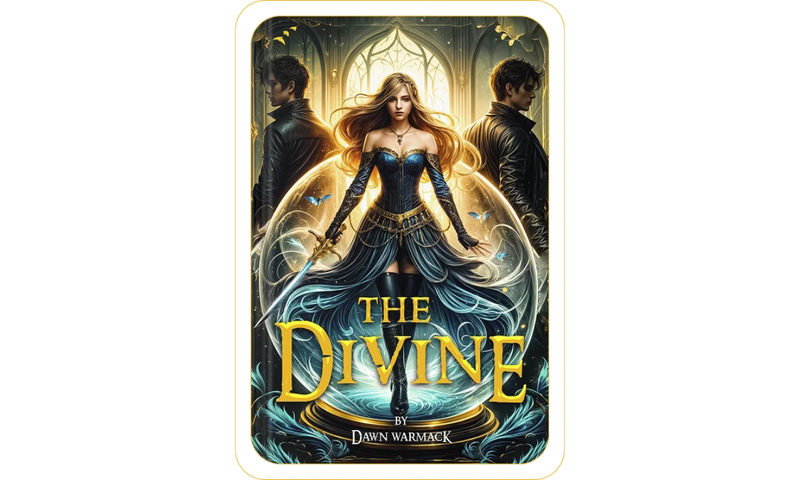
Some books announce themselves immediately. The Divine by Dawn Warmack is one of them. It pulls readers in with a historical mystery, then widens into a full blown fantasy world built around rival vampire clans, and it does both without feeling like two separate books stitched together.
Set against the fog and unease of 1888 Boston and London, the story follows Cora Hughes as her search for answers about a killer known as Jack the Ripper leads her somewhere she never expected. What starts as curiosity turns into an introduction to a hidden society with its own history, its own rules, and its own war brewing beneath the surface.
If you've been waiting for a good fantasy book that actually earns its scale instead of rushing to get there, this one is worth your time.
A Society Built From the Ground Up
One of the strongest things Dawn Warmack does in The Divine is resist the urge to keep her vampire clans vague. Readers get real structure here: hierarchies that have existed for generations, old grudges that still shape present day decisions, and a political landscape inside the clans that feels as tangled as anything in the human world Cora leaves behind.
That level of detail is what separates a good fantasy book from a forgettable one. The world doesn't just exist to host a plot. It has history, tension, and its own internal logic, which makes every scene set inside it feel lived in rather than invented on the spot.
Characters Who Refuse to Be Simple
There are no easy heroes or villains in this book, and that's exactly the point. Across the clans, readers meet characters who are loyal to a fault, others who are ruthless for reasons that eventually make sense, and plenty who sit somewhere uncomfortable in between. Warmack lets her characters make choices that are morally messy, which keeps readers invested in outcomes that aren't obvious from the start.
Cora herself carries much of that same complexity. She isn't dropped into this world as a chosen hero with nothing to lose. Every discovery she makes about the clans and her place among them comes with a cost, and the story never lets her, or the reader, forget that.
A Story That Doesn't Slow Down
Pacing is where a lot of fantasy novels lose momentum, but The Divine keeps pushing forward. The early mystery moves quickly, the introduction to the vampire clans deepens the stakes rather than pausing them, and the final stretch of the book ties both threads together into a climax that actually feels earned.
Readers looking for a story that respects their time will notice this immediately. There's very little wasted space here, which is part of why the book has drawn attention as one of the better fantasy releases of the year.
Emotion Underneath the Mythology
For all its world building, the heart of The Divine is still personal. Loyalty, grief, and love all get tested throughout the story, and those emotional threads are what keep the vampire politics from feeling cold or purely mechanical. Warmack writes conflict on a large scale, but she never loses sight of what it costs the people living through it.
That balance between epic stakes and personal stakes is a large part of why the novel resonates beyond typical vampire fiction. It isn't just about who wins the war between clans. It's about what each character is willing to become in order to survive it.
Final Thought
The Divine earns its place among the good fantasy books of 2026 because it treats world building, character, and emotion as equally important, rather than leaning on just one to carry the story. Dawn Warmack has built a vampire society with real depth, paired it with characters worth rooting for and worrying about, and wrapped it all in a mystery that never loses its pull. For readers who want fantasy with substance behind the spectacle, this is a strong place to start.
Frequently Asked Questions
What makes The Divine stand out among vampire fantasy novels? Its focus on structure sets it apart. Rather than treating vampires as a simple threat, the book builds out clan hierarchies, politics, and history, giving the world a depth that most vampire fiction doesn't attempt.
Are the characters more good versus evil, or something more complicated? More complicated. Readers will find champions, villains, and everyone in between, often making choices that are morally gray rather than clearly right or wrong.
Is the pacing slow or fast? The book moves quickly. The mystery opens the story at a brisk pace, and the introduction of the vampire clans adds momentum rather than slowing things down.
What emotional themes run through the story? Loyalty, love, loss, and the cost of power all play a central role, giving the fantasy elements real emotional weight rather than existing purely for spectacle.
Who is this book best suited for? Readers who enjoy vampire fiction, morally complex characters, and richly built fantasy worlds will find a lot to like, especially those looking for a good fantasy book that balances mythology with genuine emotion.
Comments
No comments yet. Be the first to comment!